
Improve Your English Proficiency: 7 steps to mastery in 2026.
For international students and professionals, the goal to **Improve Your English Proficiency** is often the single most important factor in career advancement and academic success. While basic communication skills are sufficient for tourism, true proficiency (C1 or C2 level) is required to excel in US universities or secure competitive internships. Many learners hit a “plateau” where they can understand well but struggle to express complex ideas fluently. To break through this barrier, you need active, targeted strategies rather than passive learning. This guide outlines 7 proven steps to **Improve Your English Proficiency**, transforming you from a learner into a confident, articulate speaker in 2026.
Table of Contents
1. Immersion Techniques to Improve Your English Proficiency
You do not need to live in the USA to create an English-speaking environment. Digital immersion is a powerful tool to **Improve Your English Proficiency** from anywhere.
Create an “English Bubble”
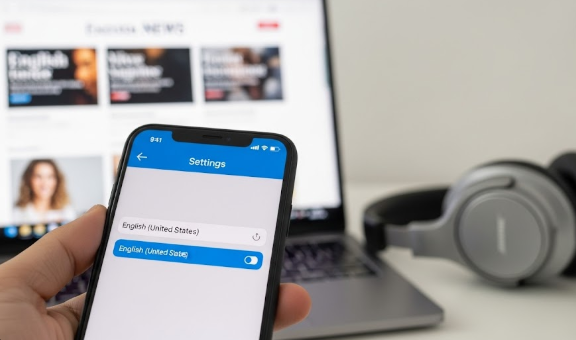
Change the language settings on your phone, computer, and social media accounts to English. This forces your brain to process the language constantly during daily tasks. Furthermore, replace your local news intake with reputable American sources like *The New York Times* or *NPR*. This exposes you to high-level vocabulary and current events, which is crucial for cultural literacy.
Podcast and Audiobook Consumption
Passive listening is not enough. To truly **Improve Your English Proficiency**, engage with content that challenges you. Listen to podcasts like *Freakonomics* or *TED Radio Hour* at 1.2x speed to train your ears for fast-paced, intellectual conversation.

2. Active Speaking Habits: Essential to Improve Your English Proficiency
Speaking is often the hardest skill to master due to fear of making mistakes. However, consistent oral practice is non-negotiable.

The Shadowing Technique
This is a favorite among polyglots. Listen to a native speaker (on YouTube or a podcast) and repeat exactly what they say, *simultaneously*, matching their speed, intonation, and emotion. This builds muscle memory in your mouth and helps reduce your accent.
Engage in Social Hobbies
If you are already in the US, join clubs that force you to speak. For example, joining a sports league or a volunteer group puts you in situations where communication is functional and necessary. For ideas, check our guide on Popular Hobbies in the USA.
3. Vocabulary Expansion: Moving Beyond Basic English
To reach C1/C2 level, you must move beyond “good” and “bad.” You need specific, nuanced vocabulary.
Focus on Collocations and Phrasal Verbs
Native speakers rely heavily on collocations (words that naturally go together, like “heavy rain” not “strong rain”) and phrasal verbs (like “run into” vs “run over”). Memorizing lists of isolated words is inefficient. Instead, study phrases in context. This creates a natural flow in your speech and is a key indicator that you have managed to **Improve Your English Proficiency**.
CEFR Levels: The Path to Proficiency
| Level | Description | Goal for 2026 |
|---|---|---|
| B1 / B2 (Intermediate) | Can handle most travel/social situations. | Baseline for arrival. |
| C1 (Advanced) | Effective operational proficiency. | Required for University. |
| C2 (Mastery) | Near-native nuance and speed. | Required for Executive Roles. |
4. Professional Writing Skills to Improve Your English Proficiency
Academic and professional writing in the US is distinct: it values conciseness, directness, and active voice.
Read High-Quality Journalism
Reading articles from the *Wall Street Journal* or *The Atlantic* exposes you to complex sentence structures and persuasive arguments. Try to emulate this style in your own writing.
Utilize Digital Tools Wisely
Tools like Grammarly or Hemingway Editor are useful, but don’t rely on them blindly. Use them to understand *why* a sentence was flagged. Is it passive voice? Is it wordy? Analyzing these corrections is an active way to **Improve Your English Proficiency**.
Strong English skills are mandatory if you plan to navigate the complex social landscape of university. For tips on integrating socially, read our guide on University Life in America.
For standardized testing resources (TOEFL/IELTS) often required for admissions, visit the official ETS TOEFL Website.
The decision to Improve Your English Proficiency is an investment that pays dividends for a lifetime. By creating an immersive environment, practicing active speaking, and refining your professional vocabulary, you will not only pass exams but also thrive in the competitive American landscape of 2026.